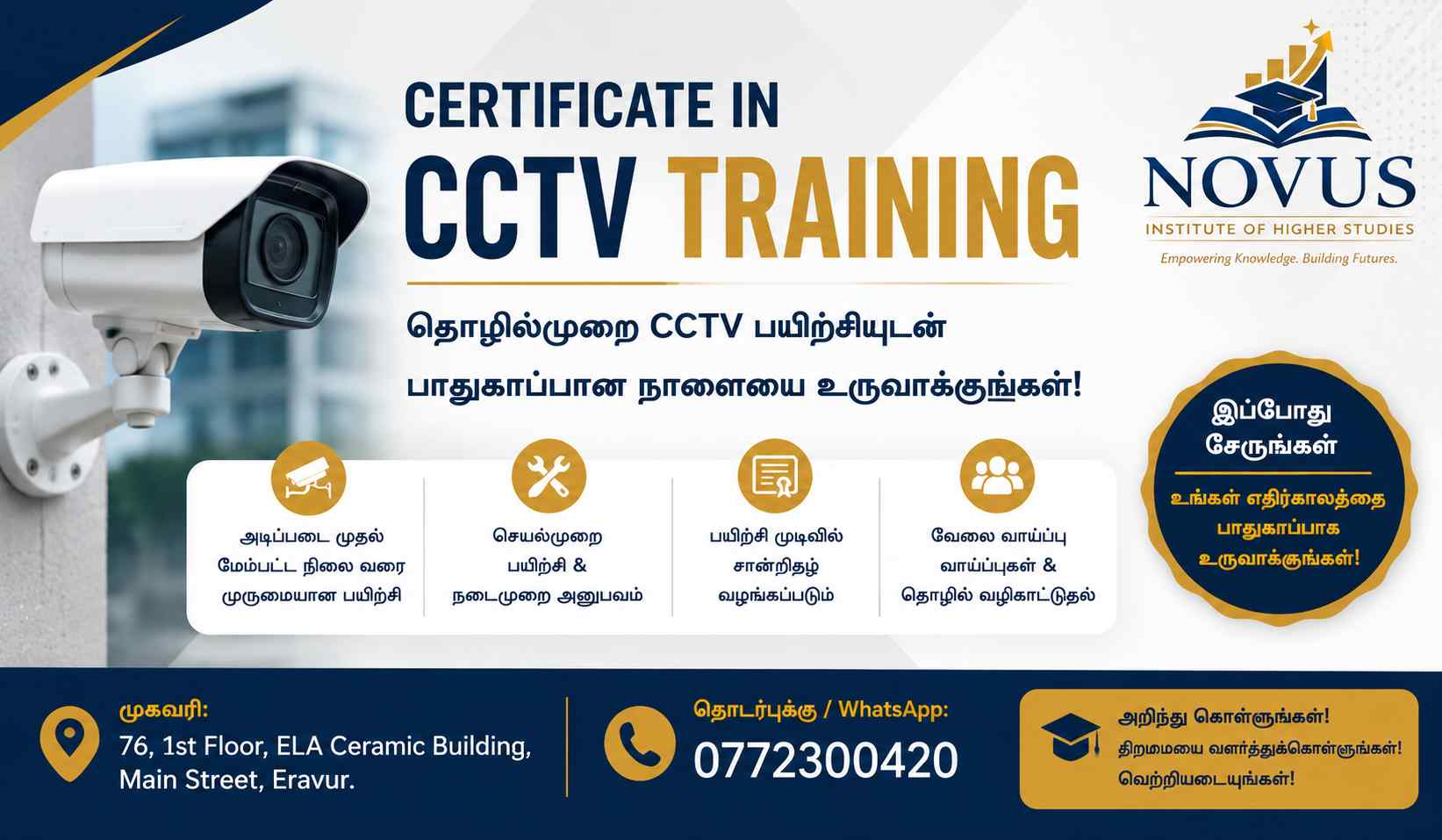
🎯 Course Overview
The Certificate in CCTV Training is designed to provide students with practical knowledge and hands-on skills in the installation, configuration, maintenance, and troubleshooting of CCTV surveillance systems.
This course covers both Analog and IP-based CCTV systems, enabling learners to install security solutions for homes, offices, shops, schools, and industrial environments. The program emphasizes practical training and real-world applications.
🎯 Course Objectives
Upon successful completion of this course, students will be able to:
- Understand CCTV surveillance principles and security concepts
- Identify different types of CCTV cameras and recording devices
- Install and configure DVR and NVR systems
- Perform CCTV cabling and connector termination
- Configure IP cameras and network settings
- Enable remote viewing via mobile phones and computers
- Troubleshoot common CCTV system faults
- Maintain and upgrade CCTV surveillance systems effectively
📚 Course Modules
Module 1: Introduction to CCTV Systems
- Basics of CCTV technology
- Applications of surveillance systems
- Analog vs IP CCTV systems
- CCTV standards and safety
Module 2: CCTV Components & Equipment
- Types of CCTV cameras
- Dome, Bullet, PTZ, and IP cameras
- DVR and NVR systems
- Storage devices and hard drives
Module 3: Cabling & Installation Techniques
- Coaxial cable installation
- CAT5e/CAT6 cabling
- Power supply connections
- BNC connectors and RJ45 crimping
- Installation tools and safety procedures
Module 4: CCTV Camera Installation
- Camera positioning and coverage planning
- Indoor and outdoor installations
- Mounting techniques
- System testing and commissioning
Module 5: DVR & NVR Configuration
- DVR/NVR setup
- Recording schedules
- User management
- Backup and storage management
Module 6: Networking Fundamentals
- Introduction to computer networking
- IP addressing
- Routers and switches
- LAN and WAN concepts
Module 7: IP Camera Configuration
- IP camera setup
- Network integration
- PoE technology
- Video streaming configuration
Module 8: Remote Monitoring & Mobile Access
- Remote viewing setup
- Mobile application configuration
- Cloud access
- DDNS and port forwarding
Module 9: Maintenance & Troubleshooting
- Diagnosing CCTV faults
- Camera and cable testing
- Network troubleshooting
- Preventive maintenance practices
Module 10: Practical Project
- Complete CCTV system installation
- Camera configuration
- Network integration
- Final practical assessment and project presentation
📌 Entry Requirements
- Minimum O/L qualification preferred
- Basic computer knowledge
- No prior CCTV experience required
- Suitable for school leavers, technicians, electricians, and job seekers
⏳ Duration
2 – 3 Months (Part-Time / Weekend Classes)
🏆 Certification
Upon successful completion of the course, students will be awarded:
📜 Certificate in CCTV Training
Issued by Novus Institute of Higher Studies – Eravur
The certificate confirms competency in:
- CCTV system installation
- DVR/NVR configuration
- IP camera networking
- Remote monitoring setup
- CCTV maintenance and troubleshooting
💼 Career Opportunities
Graduates can work as:
- CCTV Installation Technician
- Security Systems Technician
- Surveillance System Operator
- Network & CCTV Support Technician
- Self-Employed CCTV Installer
- Security Solutions Consultant
This course is ideal for anyone looking to start a career in the rapidly growing electronic security and surveillance industry.